
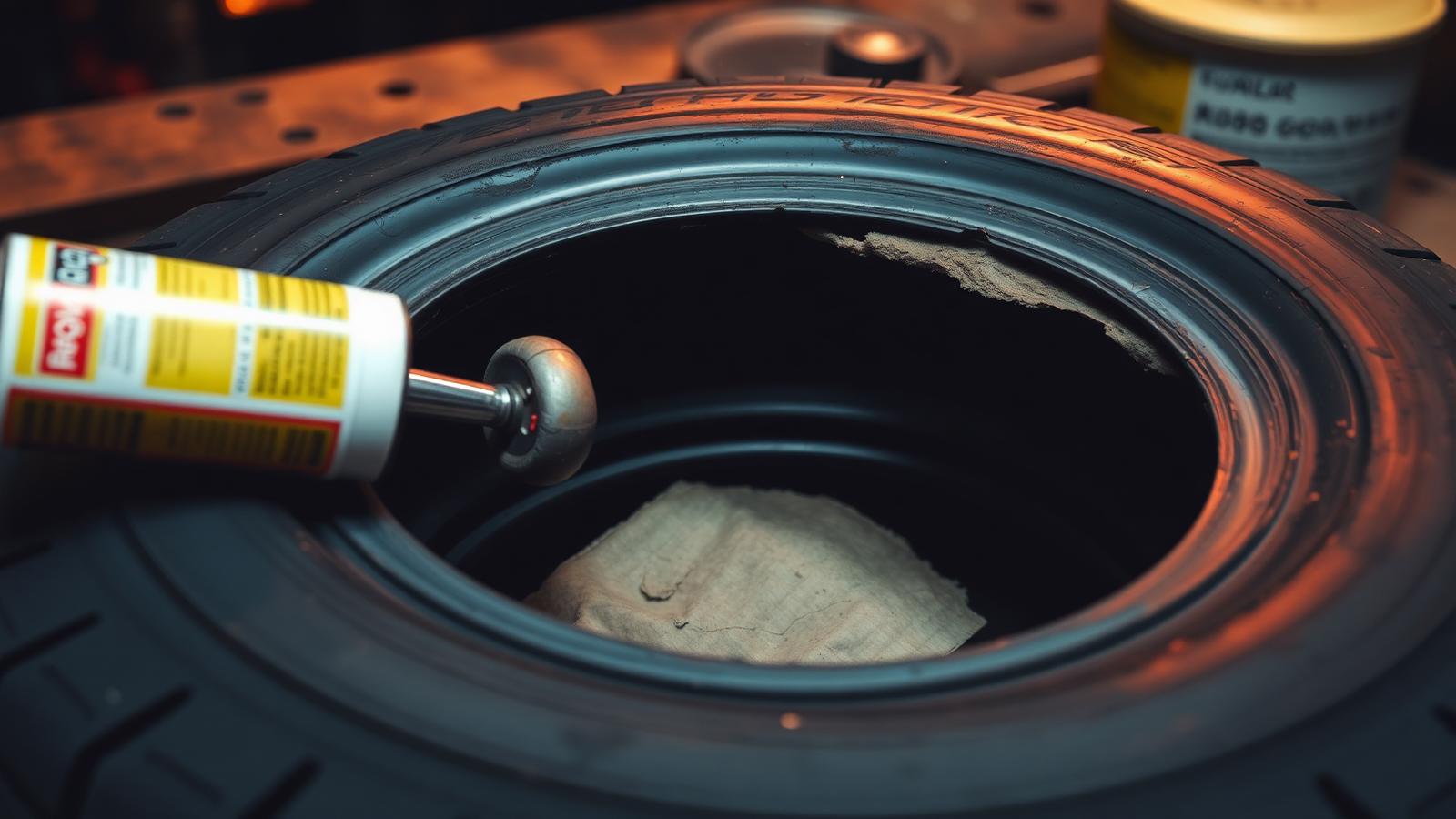
Mobile Puncture Repair inCardiff, Newport & Bristol —proper patches, not sticky plugs.
Where the tyre can safely be saved, a spec-compliant internal patch repair costs a fraction of a replacement and lasts the life of the tread. We assess honestly on arrival and only repair what BS AU 159 allows.
Typical arrival 30–45 minutes · card payments at the kerb · IMI-certified · NTDA member.
Puncture Repair — done properly, on your driveway.
What it is
Puncture repair is the internal patching or combined plug-patch of a tyre where the damage sits inside the central tread area and the casing is otherwise sound. Carried out to the British Standard BS AU 159 that professional tyre fitters work to — not a rope plug pushed in from outside.
Who it's for
Drivers who don't want to bin a nearly-new tyre because of a nail. Fleet operators looking to keep total tyre cost down. Anyone whose warning light is on but hasn't yet lost pressure — often a repairable slow puncture.
When you need it
As soon as you spot the leak or the TPMS light comes on. Driving on a punctured tyre for miles at low pressure destroys the inner liner and turns a repairable tyre into a scrap tyre very quickly.
Why it matters
A correct repair is safe for the life of the tyre and MOT-legal. A wrong repair — an external plug in the sidewall, a repair over previous damage, or a repair on a run-flat that shouldn't be repaired — is a slow-motion blowout waiting to happen.
- Internal patch repairs to BS AU 159 standard
- Assessment first — honest advice
- Fitted and balanced back to the vehicle
- Cars, vans and light commercials
The cost of ignoring it is rarely the cost you expected.
Ignoring a slow puncture
Below 15 psi the sidewall flexes past its design limit. Twenty miles of that and the inner liner de-laminates — the tyre is now scrap, not repairable.
DIY external plug kits
Rope plugs are a temporary get-you-home fix at best, and the British Standard doesn't recognise them as a permanent repair. On MOT they'll fail.
Repairing a tyre that shouldn't be repaired
Sidewall damage, shoulder damage, damage overlapping a previous repair, or damage on some runflats cannot be safely repaired. A fitter who ignores that is selling you a future blowout.
Five steps. Same every time. No surprises.
-
01
Locate the leak
Water-soap test to find the exact damage point — not just 'somewhere near the nail'.
-
02
Assess against BS AU 159
Position, size and angle of damage checked against the standard. Sidewall or shoulder damage = replacement, and we say so.
-
03
Remove & inspect internally
Tyre demounted from the rim, inner liner inspected for run-flat damage. If the inside is compromised we stop and quote a new tyre.
-
04
Prep, patch & vulcanise
Damage area buffed, cleaned, treated with vulcanising cement, and a matched combination patch-plug applied and rolled to bond.
-
05
Refit, balance & sign-off
Tyre refitted, wheel rebalanced, torqued to spec, pressures set and TPMS reset where needed. Repair marked and logged.
Concrete outcomes — not slogans.
Fraction of the cost
Typically 20–30% of the price of an equivalent new tyre — real money back in your pocket.
MOT-legal & spec-compliant
Repairs to BS AU 159, so the tyre passes future MOTs without a note.
Honest assessment first
If we can't safely repair it, you're told before we start — not sold a false fix.
Same-day, on your driveway
No garage waiting room, no lost half-day.
Long-life repair
A correct patch repair is designed to last the remaining life of the tread.
Balance & TPMS included
Repair isn't just a plug — the wheel goes back on balanced and correctly torqued.
Mobile Puncture Repair — the bits fitters usually skip.
What BS AU 159 actually allows
The British Standard limits repairs to the central tread area (the 'minor repair area'), damage no larger than 6mm in a passenger tyre, no overlap with previous repairs, no damage from having been run flat, and no repair in the sidewall or shoulder. Repairs must be internal — an external plug alone doesn't meet the standard. Every repair we carry out is documented against these criteria.
Slow punctures, valves, and phantom leaks
Not every 'puncture' is a nail. Corroded alloys allow air to escape past the bead, dying valve cores drop pressure over weeks, and TPMS sensors themselves can leak from the seal. We check all of those before assuming a tread repair is needed — often the fix is a £15 valve rather than a repair job at all.
When a repair isn't the right answer
Runflats after being driven flat, sidewall cuts, cord-showing wear on the shoulder, or repeated punctures in the same tyre all point to replacement. Being straight about this saves you a repair fee for a tyre you'll be replacing next month anyway.
Whether it's a driveway job in Cardiff, a roadside call-out around Newport, or across the Severn into Bristol, the standard is the same. See the full list of services, or head straight to the contact page.
Answers to what drivers actually ask.
How much does a mobile puncture repair cost in Cardiff, Newport or Bristol?
Prices are quoted on request — call us with the tyre size and location and we'll give you a firm price before the van rolls. If the tyre isn't safely repairable, you're not charged a repair fee, only the call-out.
How long does a puncture repair take?
About 30–40 minutes on site once we arrive: demount, inspect, patch, refit, balance, retorque.
Is a mobile patch repair as safe as a garage one?
Yes — the process is the same and repairs are made to BS AU 159. What matters is the standard the fitter works to, not the postcode of the workshop.
Will my puncture repair pass an MOT?
Yes, provided it complies with BS AU 159 — which is exactly the standard we work to. The tester will look for repair location, size, and correct internal patching.
Can you repair a runflat?
Sometimes — but only if the tyre has not been driven on while flat, the damage is in the minor repair area, and the manufacturer permits repair. Many runflats do not. We assess honestly on site.
Why can't you repair a sidewall puncture?
The sidewall flexes constantly under load and no patch can safely handle that flex over time. A repaired sidewall is a blowout risk — no reputable fitter will do it.
How long will a proper repair last?
For the remaining life of the tread — often years.
Do you cover areas outside your main three?
Yes — Gloucester, Swansea, Taunton, Hereford, Brecon and Chepstow are regular coverage. Ring us for anywhere further out.
Related services
Stuck on the roadside?
Call now — we're on our way.
24/7 across Cardiff, Newport, Bristol and surrounding areas. Typical response 30–45 minutes. Card payments taken at the roadside.