
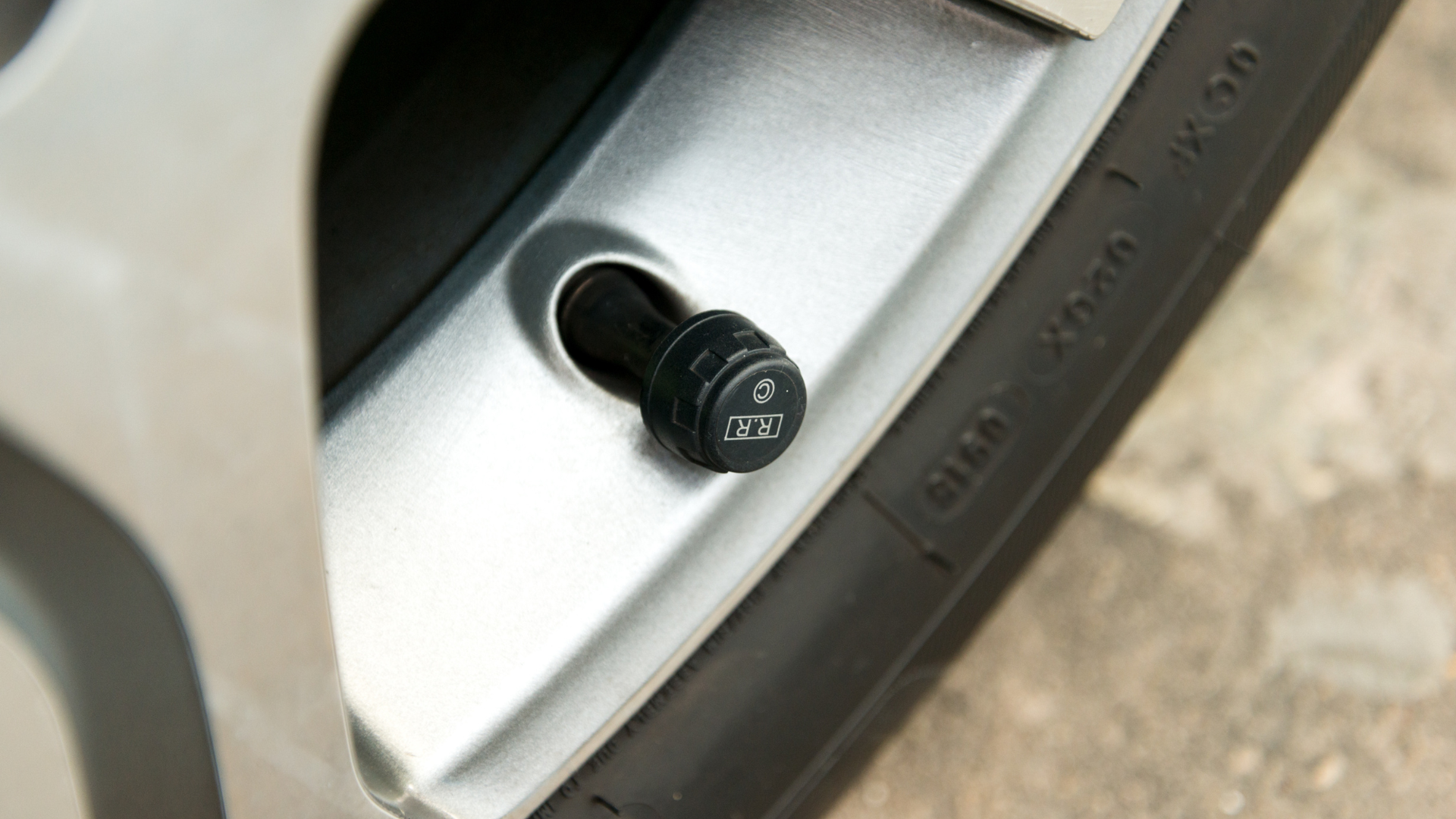
TPMS Sensor Fitting &Programming — Cardiff,Newport & Bristol.
Warning light on the dash? We diagnose the failed sensor, supply and fit a matched replacement, and programme it to your car's ECU on the spot — not with a workaround that comes back next month.
Typical arrival 30–45 minutes · card payments at the kerb · IMI-certified · NTDA member.
TPMS Sensor Fitting & Programming — done properly, on your driveway.
What it is
TPMS (Tyre Pressure Monitoring System) sensor replacement means removing a failed valve-mounted sensor, fitting a new matched sensor, and pairing it to the vehicle so the pressure and temperature data is recognised correctly by the ECU. Some vehicles auto-learn; many require an OBD programming step.
Who it's for
Anyone with a TPMS warning light that won't reset after inflation, drivers running a second (winter) set of wheels that need sensors, or those swapping to alloys that never had sensors fitted.
When you need it
As soon as the warning stays on after correctly inflating all four tyres. TPMS is an MOT check on any vehicle first registered with a functional system — a failed sensor is an MOT fail.
Why it matters
Beyond the MOT, TPMS is genuinely useful — it catches slow punctures before they become blowouts. A car with disabled or ignored TPMS is a car whose driver won't know a tyre is dying until it's already gone.
- Supply, fit and programme replacement sensors
- Diagnostics to identify the failed sensor
- Correct pairing to the vehicle ECU
- Cars and vans
The cost of ignoring it is rarely the cost you expected.
Ignoring the warning light
MOT fail on any vehicle where TPMS was fitted from new. Also removes the early-warning system that catches slow leaks.
Fitting universal sensors without programming
A 'universal' sensor that isn't correctly cloned or programmed just moves the warning light to intermittent. The fitter got paid; you didn't get a fix.
Damaged valves during tyre changes
TPMS valves are aluminium and don't survive being torqued by hand tools like rubber valves. Every fit should include a new service kit — many don't.
Five steps. Same every time. No surprises.
-
01
Scan & diagnose
OBD scan to identify which sensor(s) are reporting fault, low battery or no signal. TPMS trigger tool used to confirm at the wheel.
-
02
Source matched sensor
Replacement sensor selected to match your vehicle's frequency (315MHz or 433MHz) and communication protocol.
-
03
Fit new sensor & service kit
Tyre demounted, old sensor removed, new sensor fitted with new valve core, seal and nut kit torqued to spec.
-
04
Programme & pair
New sensor cloned to the failed sensor's ID or auto-learn triggered depending on vehicle protocol. Confirmed via OBD scan.
-
05
Balance, refit & verify
Wheel rebalanced, refitted, torqued, pressures set. Warning light cleared and system watched for 5–10 minutes to confirm.
Concrete outcomes — not slogans.
Warning light off — properly
Not just cleared with a scanner and back next week.
MOT-legal
System fully functional, ready for the next test.
Early puncture warning restored
You get told about a slow leak before it becomes a blowout.
Correct protocol matched
Vehicle-specific frequency, ID and communication — no universal-part shortcuts.
New service kit fitted
Aluminium valves aren't reusable — every replacement includes new sealing hardware.
One visit, no dealer trip
Cars we cover include BMW, VW/Audi group, Ford, Vauxhall, Renault, Peugeot, Kia, Hyundai, Toyota and more.
TPMS Sensor Fitting & Programming — the bits fitters usually skip.
Direct vs indirect TPMS — what your car has
Direct TPMS uses a physical sensor in each valve reporting actual pressure. Indirect TPMS uses the ABS wheel-speed sensors to infer a low tyre from its slightly smaller rolling radius. Direct is more accurate and more common on cars from ~2014 onwards. If yours is indirect, there's no sensor to replace — the fix is usually just a proper reset. We identify which system you have before quoting anything.
Winter wheel sets and TPMS
Running a second set of wheels for winter tyres? You have three options: fit sensors on the winter set and programme when swapping (best experience), leave the warning light on all winter (allowed but annoying and MOT-relevant if the swap crosses test date), or use the vehicle's second-set memory where it exists. We handle any of these — but option one is what we recommend.
Sensor batteries and expected life
TPMS sensors are sealed units with an integral battery, typically lasting 7–10 years. There's no serviceable battery; when it dies, the sensor is replaced. On cars over 8 years old, if one sensor fails there's a fair chance the others will follow within 12 months — worth budgeting for a full set rather than a chase-the-fault cycle.
Whether it's a driveway job in Cardiff, a roadside call-out around Newport, or across the Severn into Bristol, the standard is the same. See the full list of services, or head straight to the contact page.
Answers to what drivers actually ask.
How much does TPMS sensor fitting cost?
Quoted on request — sensor prices vary by vehicle make and model. We give a firm price on the phone before dispatch. Full sets are quoted at a lower per-corner rate.
How long does programming take?
About 20–30 minutes per sensor on site including OBD programming and verification.
Will TPMS fail my MOT?
Yes — on any vehicle first registered with a functional TPMS, a permanently lit warning light is an MOT fail.
Can you programme sensors for any make?
The vast majority — BMW, VW/Audi group, Ford, Vauxhall, Renault, Peugeot, Kia, Hyundai, Toyota, Mazda, Nissan, and more. Ring with your reg if you're not sure.
Why did my sensor fail?
Most commonly a dead battery after 7–10 years of service. Also corrosion at the alloy interface, damage during a previous tyre change, or a cracked valve stem.
Can I just have the warning light turned off?
Not permanently — the ECU re-tests the system on every start. And doing so would fail your next MOT anyway. The proper fix is a working sensor.
Do I need sensors on my winter wheel set?
Strongly recommended — otherwise the warning light stays on all winter and you lose the low-pressure alert entirely.
Do you cover TPMS work outside your main three cities?
Yes — Gloucester, Swansea, Taunton, Hereford, Brecon and Chepstow are all regular runs.
Related services
Stuck on the roadside?
Call now — we're on our way.
24/7 across Cardiff, Newport, Bristol and surrounding areas. Typical response 30–45 minutes. Card payments taken at the roadside.