
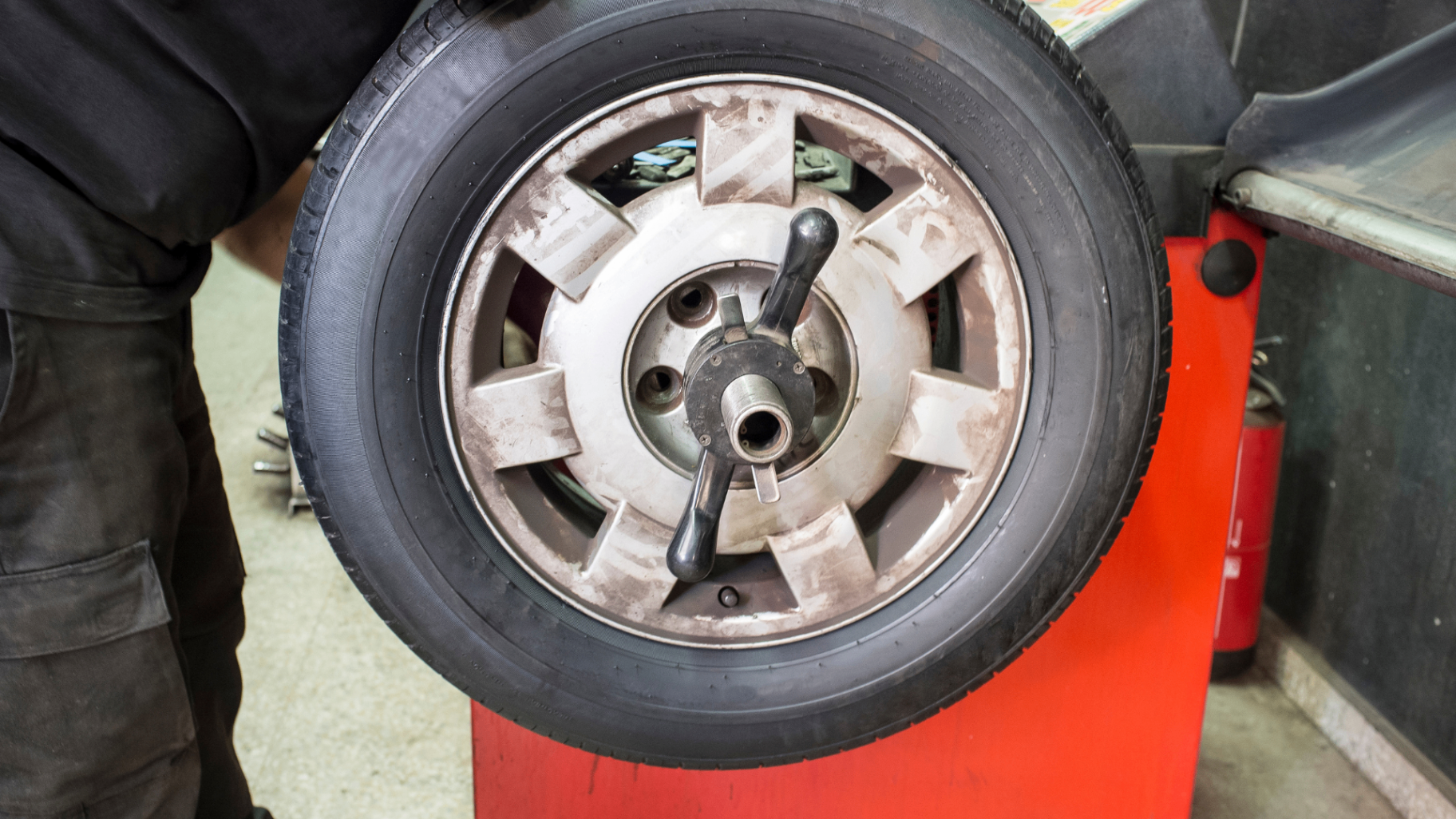
Mobile Wheel Balancing inCardiff, Newport & Bristol —smooth ride, longer tyre life.
Steering-wheel wobble at 60? Feathered tread edges? A digital balance on your driveway costs less than a set of front bushes and fixes the cause before it costs you the suspension.
Typical arrival 30–45 minutes · card payments at the kerb · IMI-certified · NTDA member.
Wheel Balancing — done properly, on your driveway.
What it is
Wheel balancing corrects the uneven distribution of weight around a tyre and wheel assembly by adding calibrated weights to the rim. We use a modern digital dynamic balancer that measures both static and couple imbalance on each wheel.
Who it's for
Anyone feeling vibration through the steering wheel or seat at motorway speeds, or seeing uneven tread wear on the front tyres. Also drivers who've had wheels swapped between vehicles, refurbished, or fitted with new tyres elsewhere without a balance.
When you need it
After every tyre change (we include it), after a hard pothole strike, when swapping between summer and winter wheel sets, or the moment you first notice speed-dependent vibration.
Why it matters
An unbalanced wheel doesn't just feel bad — it shortens tyre life by 25% or more, wears wheel bearings, hammers steering track-rod ends, and eventually shows up as suspension knock. A £10 imbalance untreated becomes a £400 bill nine months later.
- Included with every tyre fitment
- Stand-alone balancing available
- Digital balancer used on-site
- Fixes vibration and uneven wear
The cost of ignoring it is rarely the cost you expected.
Steering wobble ignored
Vibration at 55–70mph is the classic front imbalance signature. Left alone, the tyre feathers, the bearings load unevenly, and cornering feel goes vague as bushes soften early.
New tyres fitted without balancing
Even a brand-new tyre is not naturally perfectly round. Skipping the balance to save £5 per corner wipes the first 5,000 miles of tread evenly across all four.
Balancing done blind at speed
Old-style spin balancers with no couple correction fix static imbalance but miss dynamic wobble — the one you actually feel. A modern dynamic balancer solves both.
Five steps. Same every time. No surprises.
-
01
Wheel off & clean
Wheel removed from the hub, old weights cleared, rim inner cleaned so weights actually stick.
-
02
Measure on digital balancer
Wheel mounted on our digital balancer, dimensions and offset entered, spin-up to measure static and dynamic imbalance.
-
03
Apply calibrated weights
Weights fitted to the manufacturer's positions — clip-on for steel, adhesive for alloys — matched to the measured imbalance.
-
04
Re-spin & verify
Rebalanced wheel re-spun and re-measured. Anything above 5g residual is corrected.
-
05
Refit & torque
Wheel refitted to the hub, torqued to spec, pressures set. Test-drive verified where the fault was vibration-related.
Concrete outcomes — not slogans.
Smoother motorway ride
Steering-wheel wobble gone at speed.
20–25% more tyre life
Even tread wear across the tyre, not feathered edges.
Less suspension wear
Bearings, bushes and track-rod ends stop taking the hammering.
Better wet grip
Even tread depth = even water dispersal = shorter wet stops.
Fuel efficiency
Balanced wheels roll with less lateral scrub and lose fewer mpg.
Included with every tyre we fit
You never pay for it twice.
Wheel Balancing — the bits fitters usually skip.
Static vs dynamic balance
Static imbalance is a heavy spot on one side of the wheel — it causes an up-and-down bounce. Dynamic (couple) imbalance is a heavy spot offset across the width of the tyre — it causes a side-to-side wobble in the steering. Modern digital balancers measure both in one spin; older static-only balancers can 'pass' a wheel that still wobbles. All our balancing is dynamic.
Alloy weights, tape weights and refurb finishes
Refurbished or diamond-cut alloys often need adhesive tape weights hidden on the inside of the rim rather than clip-on weights that mark the face. We carry both. On steel wheels, clip-on weights on the flange are fine and cheaper. Every weight is calibrated in grams — no more 'stick a few extra on and see'.
When balancing won't fix the vibration
A perfectly balanced wheel with a buckled rim, a broken belt inside the tyre, a worn CV joint or a seized brake caliper will still vibrate. Part of a good balance service is spotting when the fault is not actually balance — and telling you. Diagnosis before parts, always.
Whether it's a driveway job in Cardiff, a roadside call-out around Newport, or across the Severn into Bristol, the standard is the same. See the full list of services, or head straight to the contact page.
Answers to what drivers actually ask.
How much does mobile wheel balancing cost?
Quoted on request — call us with the wheel size and we'll give a firm price on the phone. Included at no extra charge with every tyre we fit.
How long does balancing four wheels take?
About 45 minutes to an hour on site.
Do I need my wheels balancing if there's no wobble?
Not urgently — but if it's been years since the last balance or you've hit a serious pothole, it's cheap insurance against uneven wear.
Can you balance alloy wheels without marking them?
Yes — we use adhesive tape weights on refurbished or diamond-cut finishes, hidden inside the rim.
Will balancing fix a steering pull?
No — pull is usually tracking (alignment) or a dragging brake, not imbalance. Balancing fixes vibration; alignment fixes pull.
How often should wheels be rebalanced?
Any time tyres are removed and refitted, and any time you hit a serious pothole or kerb. Otherwise every 20,000 miles is a reasonable check.
Is on-vehicle balancing available?
We use off-vehicle digital balancing as standard — it's more accurate than on-vehicle for the vast majority of cars.
Do you cover locations outside Cardiff, Newport, Bristol?
Yes — Gloucester, Swansea, Taunton, Hereford, Brecon and Chepstow are regular runs.
Related services
Stuck on the roadside?
Call now — we're on our way.
24/7 across Cardiff, Newport, Bristol and surrounding areas. Typical response 30–45 minutes. Card payments taken at the roadside.